
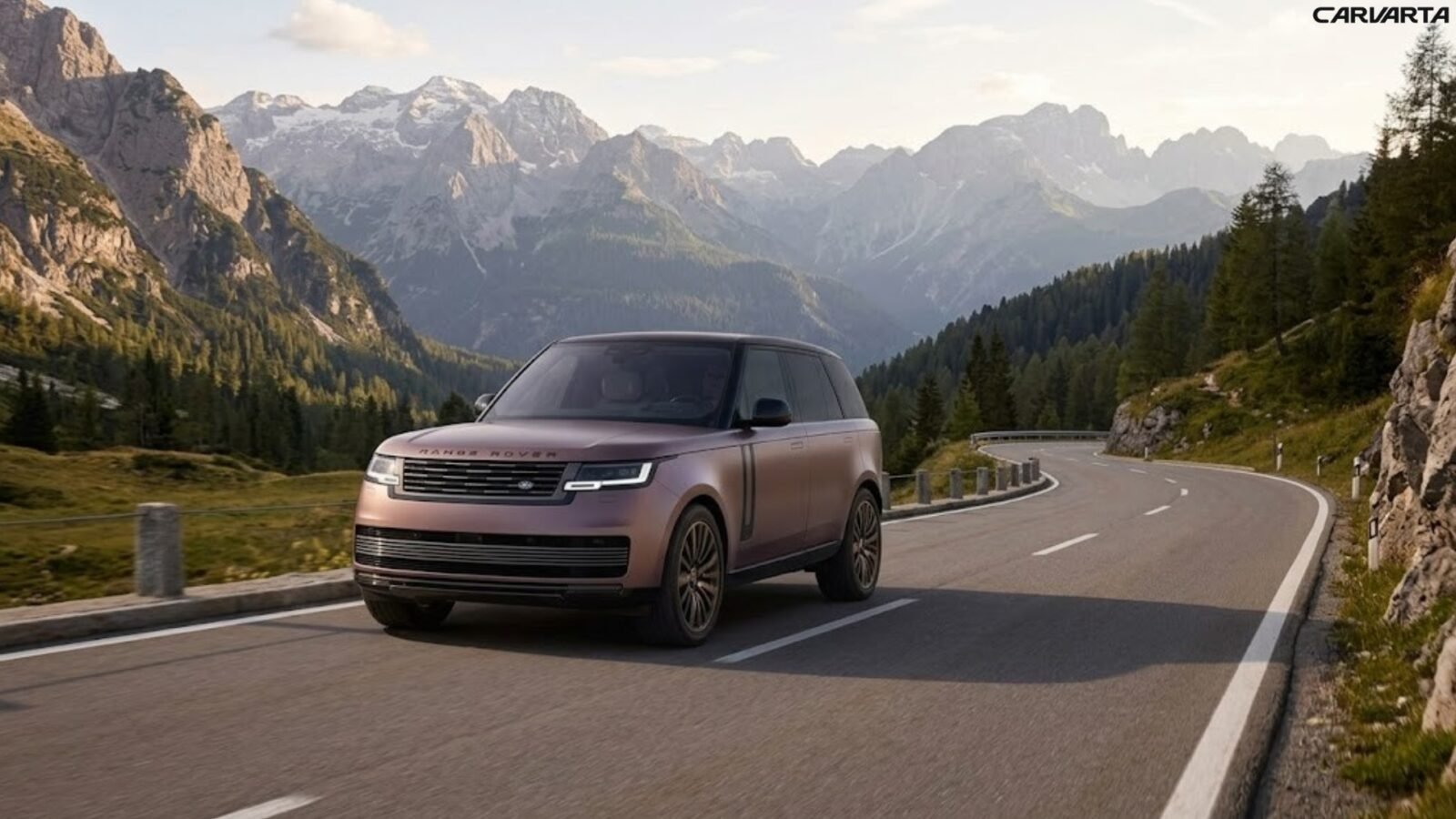
Range Rover has opened bookings for its first fully electric model in India. It marks the brand’s move from petrol and diesel dominance into the battery-powered luxury SUV space.
The Range Rover Electric brings 405kW of power, 850Nm of torque, and a claimed WLTP range of up to 600km, positioning it against rivals like the BMW iX and Mercedes-Benz EQS SUV in India’s still-thin luxury EV segment.
Built at Land Rover’s Solihull plant in the UK, the SUV retains the brand’s off-road credentials while going electric. For prospective buyers, the real question isn’t the badge — it’s whether the range, charging network, and price justify the switch. As for the purists, they’re only wondering, “Does an Electric Range Rover make sense?”. Let’s find out.
Does an Electric Range Rover Make Sense?
Range Rover isn’t the first name that comes to mind when you think of electric. For decades, its halo status has rested on an uncompromising duality. An unstoppable mechanical grit underneath, paired with a peerless luxury lounge above—traditionally soundtracked by muscular V8s and effortless, long-legged diesels.
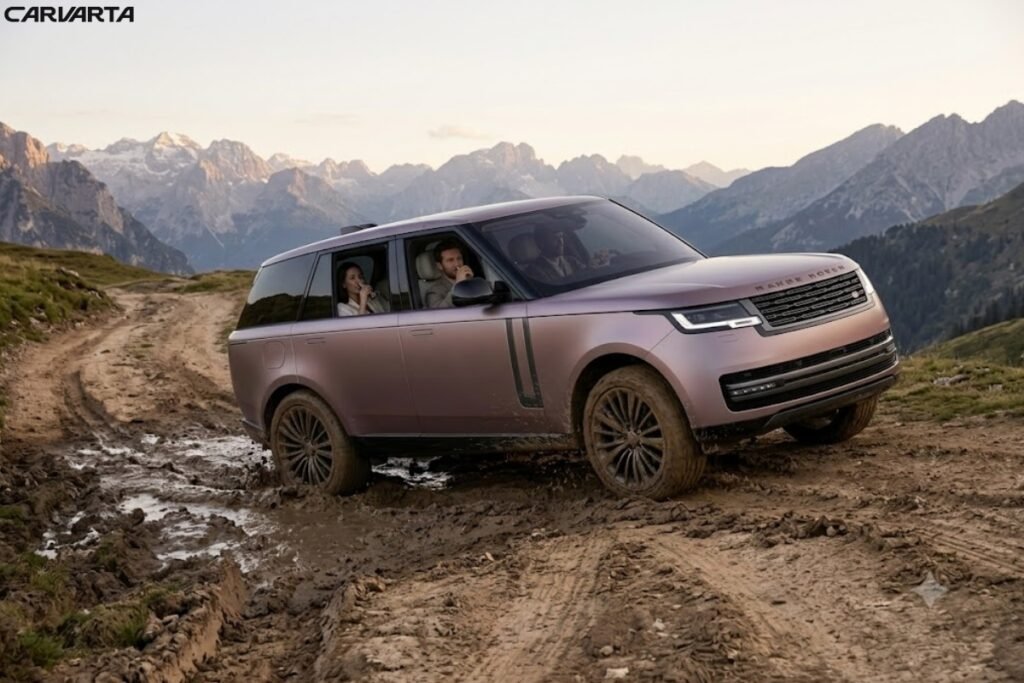
Yet, on paper, battery architecture elevates both sides of that equation rather than compromising them. Electric motors ensure a dedicated software manages wheel slip in milliseconds rather than relying on clutch packs, which aids in the off-road crawling with surgical precision.
Add to that an intact 900 mm wading depth and the absence of combustion vibration, and you get the purest mechanical serenity a flagship cabin can achieve.
The trade-off isn’t capability; it’s physics and infrastructure. Tipping the scales near three tonnes, can an ultra-luxury electric flagship genuinely conquer rural expeditions when DC fast-charging networks drop off? Or will its peerless all-terrain hardware remain confined to the urban commute?
For now, let’s see what the Range Rover EV has to offer.
Top Features of Range Rover Electric (Exterior & Interior)
Rather than reinventing its design language with radical, hyper-futuristic cues like most other high-end EVs, Land Rover refined the existing, familiar design. Built on the flexible Modular Longitudinal Architecture (MLA-Flex), Range Rover Electric comes with the legendary smooth, boxy design paired with EV-specific aerodynamic and acoustic refinements.
Exterior
The Range Rover Electric follows suit of other EVs, prioritizing aero-efficiency and clean surface transitions without abandoning the hallmark silhouette.
Aero-Optimized Grille & Flush Architecture
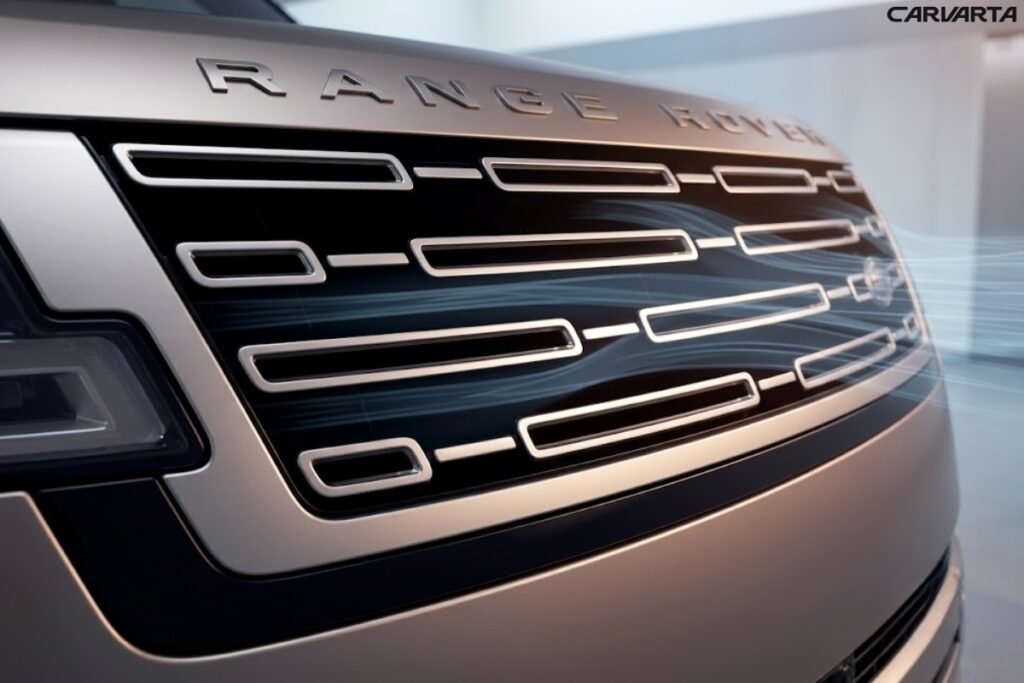
Instead of a conventional radiator opening, it features a newly sculpted, closed-pattern front grille. That optimizes laminar airflow while maintaining the commanding front fascia. Expansive, smooth body panels, seamless glazing, and deployable flush door handles streamline drag across the flanks.
Dedicated EV Design Accents
The good news for the purists is the subtle distinction in exterior design between the EV and the ICE. It features bespoke EV-badged wheel center caps—fitted to aerodynamic wheel options up to 22 inches—and dedicated puddle lamps that illuminate the ground with EV script upon entry.
Intelligent Charging Port Access
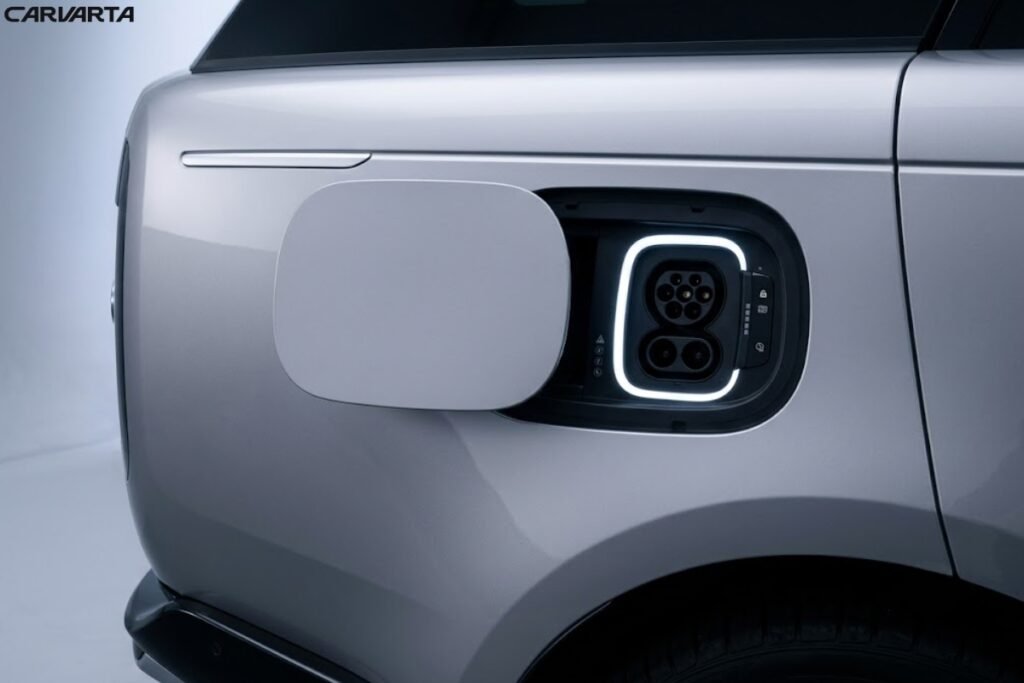
Dual powered-sliding charge door panels glide open effortlessly, revealing illuminated ports tailored for both high-output DC charging and everyday home AC plug-ins.
Uncompromised Stance & Trail Specs
Despite housing an underfloor traction pack, the vehicle preserves a full 900 mm wading depth and high-clearance approach and departure profiles, retaining its off-road pedigree.
Interior
Ranger Rovers have been pretty good at keeping the cabin noise to an incredible low. And without engine noise to mask ambient road and wind turbulence, the cabin doubles down on noise cancellation and material wellness to create an insulated, retreat-like environment.
Next-Gen Active Noise Cancellation
The Meridian™ Signature Sound System deploys integrated headrest speakers that generate targeted anti-phase signals. Working alongside acoustic laminated glass, it creates individual quiet zones for every passenger.
Next-Level Wellness & Air Quality
The Cabin Air Purification Pro system utilizes PM2.5 filtration alongside nanoe™ X technology to neutralize airborne pathogens, allergens, and odors. Its integrated CO₂ management actively monitors cabin freshness, paired with an ambient scent diffuser to mitigate driver fatigue.
Curated Tactile Materials
Every Land Rover comes with some modern, luxury expectations. To that end, the cabin offers both traditional Semi-Aniline leathers and high-end non-leather alternatives. That includes durable Ultrafabrics™ and premium Kvadrat™ wool blends in soothing palettes like Light Cloud.
Minimalist Digital Cockpit
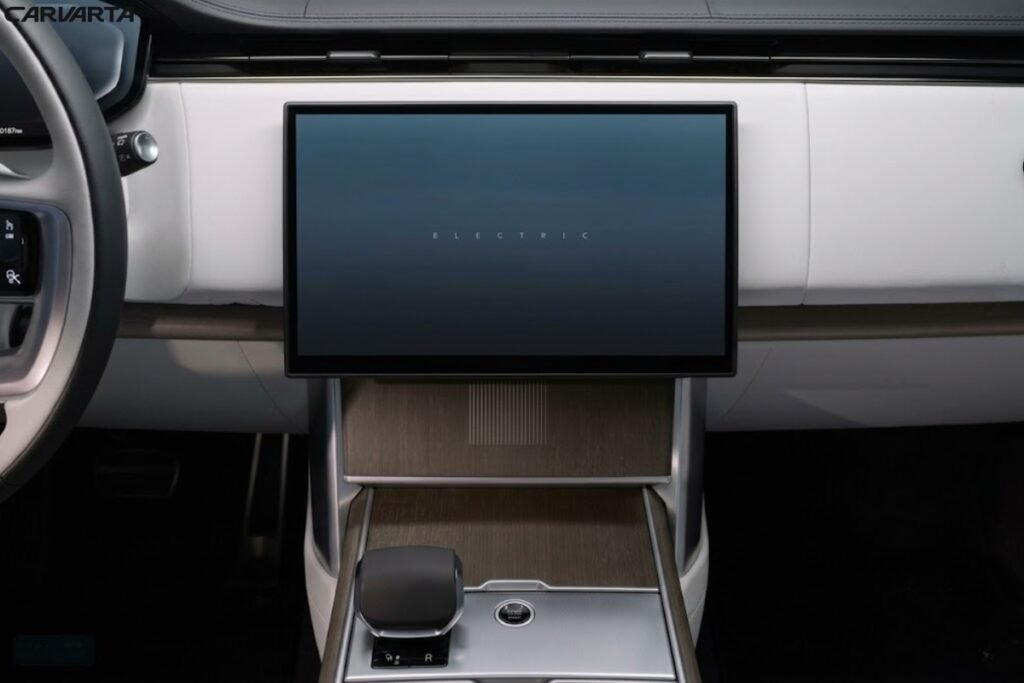
This electric Range Rover follows a suite of other high-end EVs with a minimalist theme, centered around a 13.1-inch curved floating glass Pivi Pro display. This infotainment hub handles over 90% of tasks within two taps.
The interface includes EV-dedicated software that manages preconditioning, live route-energy estimates, and real-time charging network availability.
All these bells and whistles are alright, but what about the specs?
Range Rover EV vs ICE: What Stays the Same vs What Changes
Rather than building an experimental electric novelty from scratch, Jaguar Land Rover engineered the adaptable MLA-Flex platform. It’s meant to preserve the flagship’s core DNA while swapping mechanical hardware for high-voltage power.
Shared Flagship DNA: Identical to the ICE Range Rover
Land Rover made zero compromises on the EV’s seating capacity, interior room, water wading depth, ground clearance, or cabin tech. So the electric version feels completely familiar to current owners.
| Tech Spec | Both ICE & Electric | Notes |
|---|---|---|
| Water Wading Depth | 900 mm | The EV retains industry-leading water-wading capability despite the underfloor battery. |
| Wheelbase Options | SWB & LWB | Offered in both Standard and Long Wheelbase configurations without losing legroom. |
| All-Wheel Steering | Standard (up to 7.3°) | Maintains an ultra-tight turning circle for easy maneuvering in tight urban spaces. |
| Infotainment & Displays | 13.1-inch Pivi Pro | Identical curved floating glass display, paired with a 13.7-inch digital driver cluster. |
| Air Suspension | Electronic Air Suspension | Features dynamic response and adaptive damping to preserve the “magic carpet” ride. |
Top Features Unique to the Range Rover Electric
The electric variant swaps out mechanical gearboxes and exhaust plumbing for instantaneous torque, millisecond-fast traction software, and dedicated EV acoustics.
| Specification/Feature | Conventional Range Rover | Range Rover Electric |
|---|---|---|
| Powertrain | 3.0L Inline-6 / 4.4L Twin-Turbo V8 | Dual Permanent Magnet Electric Motors (AWD) |
| Power Output | 395 hp – 523 hp (Standard ICE Petrol/Diesel range) | 405 kW (Approx. 542–550 PS) |
| Torque Delivery | Up to 750 Nm (ICE V8) | 850 Nm Instant Torque |
| Traction & Slip Response | Mechanical differentials / clutch packs | Intelligent Torque Management (Within 5 ms) |
| Electrical Architecture | 12V / 48V Mild-Hybrid | 800-Volt Architecture (Up to 350 kW DC Charging) |
| Battery/Fuel Capacity | 90L Fuel Tank | 118.5 kWh Lithium-Ion Pack |
| Max Towing Capacity | Up to 3,500 kg | 2,500 kg (Reduced to Optimize EV Efficiency) |
Beyond the tech specifications and features, the most important factors of any EV are its range and charging times? Where does the Range Rover EV stand on that?
Can the Range Rover Electric Go the Distance? (Range and Charging Time)
Range Rover is an ultra-luxury SUV that is meant to go on long-trips. And some purists, who understand its capabilities, might take it on off-road adventures. In both these cases, endurance in terms of range and charging times are incredibly vital.
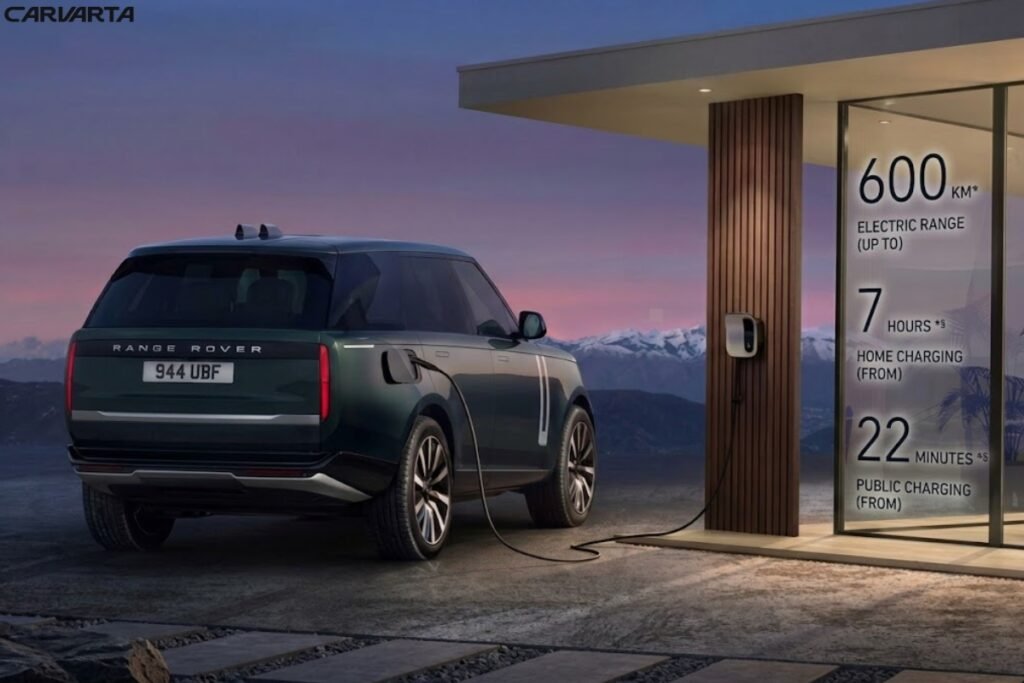
So Land Rover has built the Range Rover Electric around high-voltage hardware to keep pit stops brief and maintain usable long-range capability. Let’s look at a few highlights first.
Official Claimed Range
Up to 600 km under standardized WLTP testing conditions on a full charge.
Estimated Real-World Range
Approximately 535 km, accounting for realistic ambient temperatures, climate control usage, and highway cruising.
Battery Architecture & Protection
The large-capacity lithium-ion pack features sophisticated liquid thermal management and an intelligent buffer system designed to mitigate cell degradation from frequent fast-charging cycles.
Battery Warranty
Factory-backed with an 8-year or 1,60,000 km warranty (whichever comes first).
Supported by high-voltage electrical architecture, the SUV accommodates both ultra-rapid public corridors and overnight home replenishment:
| Charging Method | Charger Specification | Time to Charge | Added Range |
|---|---|---|---|
| Ultra-Rapid DC (Public) | 350kW DC Fast Charger | 10% to 80% in ~22 minutes | Adds up to 220 km of range in just 10 minutes |
| High-speed AD (Home/Office) | 22kW AC Wallbox | 0% to 100% in ~7 hours | Ideal for full overnight replenishment or daily workplace top-ups |
| Standard AC (Home) | 7 kW AC Single-Phase | 0% to 100% in ~19 hours | Baseline trickle charge without upgraded domestic infrastructure |
High-Load Range Penalties
Land Rover explicitly notes that sustained off-roading, extreme hill climbs, and towing will noticeably impact driving range.
Towing Retention
Despite the electrified powertrain, it retains a maximum towing capacity of 2,500 kg, ensuring it remains fully capable of hauling horseboxes, performance boats, or touring trailers.
So, Should the Range Rover Loyalists Make the Switch?
While Range Rovers have outstanding off-roading capabilities (it’s definitely one of the best at it), very few buyers use them off the beaten track. The vast majority’s lifestyle revolves around private estates, airport runs, and predictable metro corridors.
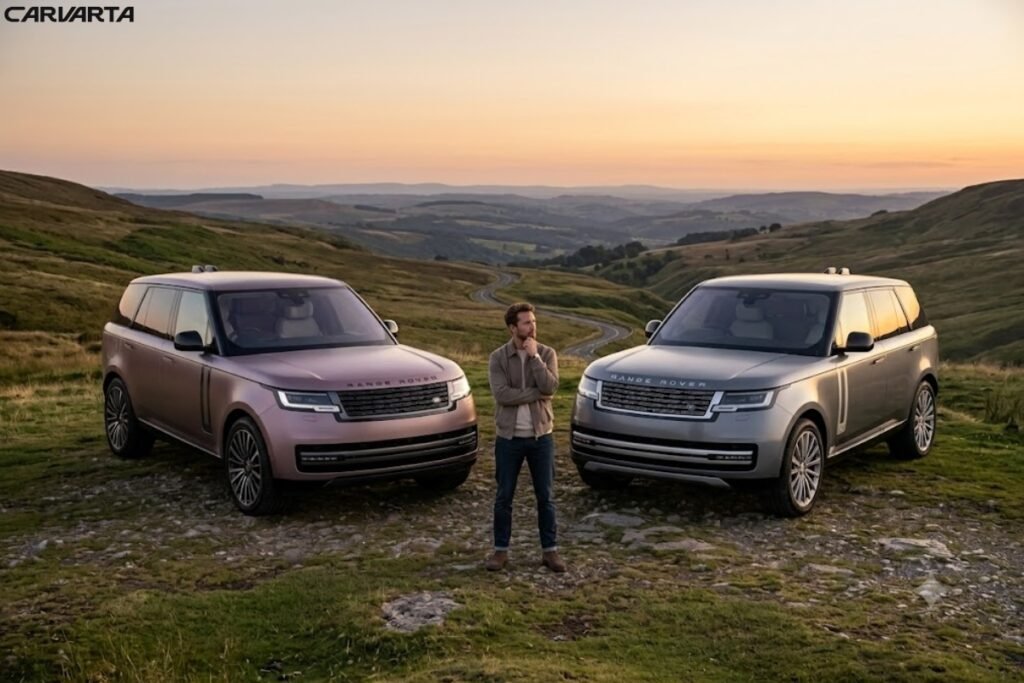
So should the traditional Range Rover buyer make the jump? Well, if I just described your routine, the Range Rover Electric isn’t just feasible—it might arguably be the purest expression of the car yet. The absence of engine vibration and instant torque means effortless drive through urban gridlock traffic.
But what if you are a petrolhead and would like to use the Range Rover like it’s really supposed to be? That means spontaneous 800-kilometer cross-country dashes and trail-bashing in remote corners. Then stick with the diesel or petrol V8 for now.
As good as this Electric Land Rover is, it’s not meant to replace the rugged adventurer’s expedition rig. It is built for the driver who wants peerless road presence, absolute cabin silence, and a home-charged daily commute without ever visiting a petrol pump again. If that fits your routine, it’s well worth the switch.
Follow Carvarta for more latest car features & stories. We bring you the real stories, raw specs, and fresh perspectives behind the cars everyone is talking about.